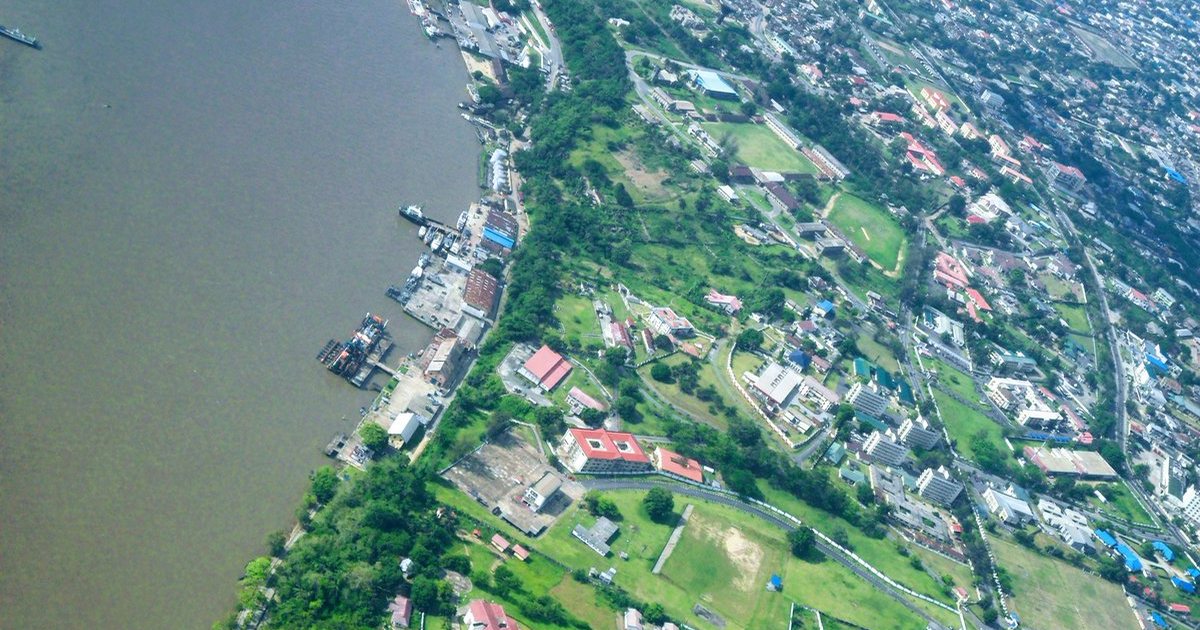
Cross River State, fondly called The People’s Paradise, is one of Nigeria’s most celebrated tourism and cultural destinations, a lush, green state that stretches from the Atlantic coast in the south to rainforest highlands in the north. Home to the ever-clean city of Calabar, the world-famous Calabar Carnival and the mountain resort at Obudu, it blends breathtaking scenery with a deep and storied history.
This complete guide brings together everything you need to know about Cross River State in one place: the full postal (zip) code for every local government area, the codes for its major towns, and an in-depth profile covering the capital, government, economy, infrastructure, education, culture, tourism and climate.
Before we get to the codes themselves, it helps to understand what they are. In Nigeria, what many people casually call a “zip code” is officially known as a postal code. These are the six digit numbers managed by the Nigerian Postal Service (NIPOST) that identify a specific area for the sorting and delivery of mail. Whether you are sending a parcel, filling out an online form, registering for a service or verifying an address, using the correct postal code for your location keeps everything accurate and reliable.
Cross River Zip Code
The postal (zip) codes of Cross River State range from 540001 to 553114. The state has 18 local government areas, each with its own code, and the capital Calabar falls under 540001 to 540281. Because Cross River State is large and every district can have its own code, no single number covers the whole state.
This is why it is always best to confirm the exact code for your specific location rather than relying on one general figure. The tables further down this page list the code for every local government area and for the major towns of the state, so you can find the one that matches your address.
How Postal Codes Work in Cross River
Nigeria’s postal code system uses six digits, and the numbers are not random. The opening digits point to a broad postal zone and district, while the remaining digits narrow the location down to a specific delivery area. In Cross River State, the codes are grouped around the capital Calabar and spread outward across the local government areas and towns.
For everyday use you rarely need to memorise these codes. What matters is knowing where to look them up and making sure you use the code for your exact district, since a parcel addressed with the wrong postal code can be delayed or misrouted.
As a simple example, a letter or package addressed to the capital, Calabar, would carry a code in the 540001 to 540281 range, while an address in one of the more distant local government areas would use a completely different code. The tables below list the ranges recorded against each local government area and major town in the state, which will get you to the right part of the numbering. They are a starting point rather than the last word: the code that matters for an official form is the one used by the post office that actually delivers to the address.
Full List of Cross River State LGA Postal Codes
Below is the complete list of all 18 local government areas in Cross River State and their postal (zip) codes.
How to read this table. NIPOST assigns postal codes to post office delivery districts, not to local government areas, and the two do not line up neatly. One delivery district often serves parts of several LGAs, which is why neighbouring areas here can share the same range — that is the system working as designed, not an error. Treat a range as the codes covering that area, not as a code issued exclusively to it. Where a code has to be exact, confirm it with the post office that delivers to the address before you submit anything.
Local Government Area (LGA)
Postal Code Range Serving This Area
Abi
543101 to 543107
Akamkpa
542101 to 542111
Akpabuyo
541103 to 541115
Bakassi
541106
Bekwarra
550102
Biase
542107 to 542112
Boki
551106 to 551111
Calabar Municipal
540211 to 540281
Calabar South
540221 to 540281
Etung
551102 to 551105
Ikom
550211 to 550281
Obanliku
552103 to 552111
Obubra
551112 to 551118
Obudu
552101 to 552109
Odukpani
541101 to 541109
Ogoja
550101 to 550112
Yakurr
553101 to 553108
Yala
550107 to 550113
Postal Codes of Major Towns in Cross River
These are some of the most searched towns and areas of the state and their postal codes.
Major Town
Postal Code Range Serving This Area
Calabar
540211
Ikom
550211
Ogoja
550101
Obudu
552101
Ugep (Yakurr)
553101
Akamkpa
542101
Calabar: The Capital of Cross River State
Calabar, the capital of Cross River State, is widely regarded as one of the cleanest, greenest and most tourist-friendly cities in Nigeria. A historic port city with roots reaching back into the pre-colonial era, it sits on the Calabar River near the Atlantic coast and serves as the administrative, commercial and cultural heart of the state.
The city is world famous for the Calabar Carnival, often described as Africa’s biggest street party, which fills its streets each December with music, colour and pageantry. Beyond the carnival, Calabar is home to attractions such as Tinapa Business and Leisure Resort, the Marina Resort and the Slave History Museum, all of which draw visitors from across Nigeria and beyond.
Historically, Old Calabar was one of the most important ports on the West African coast during the era of trans-Atlantic trade, and this heritage is preserved in the city’s museums and monuments. The old Residency building, now the National Museum, stands as a reminder of the colonial period, while the traditions of the Efik people remain a living presence in the city’s daily life.
Today Calabar combines this rich history with a reputation for orderliness, safety and hospitality that few Nigerian cities can match, reinforcing the state’s identity as The People’s Paradise and its ambition to be the country’s leading holiday destination.
Overview and History of Cross River State
Cross River State was created on 27 May 1967 as one of the original twelve states of Nigeria. In 1987 it gave up a large portion of its territory to form the new Akwa Ibom State, leaving it with its present boundaries. The state lies in the South South geopolitical zone and is divided into 18 Local Government Areas.
The state takes its name from the Cross River, the great waterway that flows through it on its way to the Atlantic. This river, together with the dense rainforests and highland ranges of the interior, has shaped the geography, economy and culture of the region for centuries.
Cross River is home to a rich mosaic of peoples, including the Efik, Ejagham, Bekwarra, Bette, Yala and many others, each with its own language, customs and traditions. This diversity, spread from the coastal south to the mountainous north, gives the state one of the most varied cultural landscapes in the country.
Its long history as a centre of trade and its position bordering Cameroon have made Cross River a meeting point of peoples and influences, a legacy that continues to define its outward-looking, welcoming character today.
Economy of Cross River State
Cross River has one of the most distinctive economies in the South South zone. Unlike its oil-dominated neighbours, the state has built much of its modern identity around tourism, anchored by Calabar and the Obudu Mountain Resort, making it a rare example of a Nigerian state that has invested heavily in leisure and hospitality.
Agriculture remains the backbone of the economy for most of the population. The state is a major producer of cocoa, oil palm, rubber, banana and a wide range of food crops, supported by its fertile soils and abundant rainfall. Forestry and the products of its rainforests also contribute to rural livelihoods.
To attract investment and diversify further, the state developed the Tinapa Business and Leisure Resort near Calabar, a large complex combining trade, shopping and entertainment, alongside a free trade zone. The seaport at Calabar adds a further commercial dimension, handling cargo for the region.
This blend of tourism, agriculture and trade gives Cross River a broader and more balanced economic base than many states, even as it continues to work towards realising the full potential of its considerable natural and cultural resources.
Quick Facts About Cross River State
Capital: Calabar
Geopolitical Zone: South South
Postal Code Range: 540001 to 553114
Number of LGAs: 18
Governor: Bassey Otu
Created: 1967
Also Known As: The People’s Paradise
Frequently Asked Questions
What is the zip code for Cross River State?
Cross River State postal codes range from 540001 to 553114. Each local government area and district has its own specific six digit code, so use the tables above to find the exact one for your area.
What is the postal code for Calabar?
Calabar, the capital, falls under the 540001 to 540281 range.
How many local government areas are in Cross River State?
There are 18 local government areas in Cross River State.
Who is the current governor of Cross River State?
The Governor of Cross River State is Bassey Otu.
What is the capital of Cross River State?
The capital of Cross River State is Calabar.
Does every area in Cross River have its own postal code?
Yes. NIPOST assigns six digit codes down to district and street level, which is why a single state wide number is not enough for accurate delivery.
What geopolitical zone is Cross River State in?
Cross River State is located in the South South geopolitical zone of Nigeria.
When was Cross River State created?
Cross River State was created in 1967, and it is today divided into 18 local government areas.
What is Cross River State also known as?
Cross River State is also known as the The People’s Paradise, a name that reflects its identity and heritage.
What is the postal code range for Cross River State?
The postal codes of Cross River State run from 540001 to 553114, covering all 18 of its local government areas and the towns within them.
Do I need a postal code to send mail within Cross River State?
Using the correct postal code helps ensure that mail, parcels and deliveries reach the right district within Cross River State quickly and accurately, and many online forms and delivery services now ask for it.
How to confirm these postal codes
Nigerian postal codes are administered by the Nigerian Postal Service (NIPOST), which assigns a six-digit code to each delivery area. Codes are occasionally revised when local government areas are created, renamed, or reorganised, and a single town can fall under more than one code depending on the delivery district. The codes on this page are compiled from NIPOST listings and state administrative records. If you are addressing official mail or completing a form where the code must be exact, confirm it on the NIPOST website or at your nearest post office.
Image credit: pbs.twimg.com
Sources and verification
We checked the practical guidance on this page against the primary or authoritative references below. Follow the linked source for the latest official position before making a payment or time-sensitive decision.